
Hosting & Cloud
Your project runs on infrastructure built to stay up, 24/7.
Where your product becomes unstoppable. We run your dedicated servers as if they were ours (patching, hardening, backups, round-the-clock monitoring) and manage your AWS environment end to end: architecture, deployment, scaling — and the bill. You sleep; we don't.
What we do here
Dedicated server management
Patching, hardening, tuning and round-the-clock monitoring. Your server becomes our problem.
Managed AWS hosting
EC2, S3, RDS, CloudFront and friends: architecture, operation and scaling without surprises.
Painless migrations
From your current hosting to dedicated or AWS: rehearsed cutover, no planned downtime, and a rollback plan.
Managed hosting and VPS
Fast, stable hosting for sites and apps, with no headaches.
Colocation on your own hardware
Your hardware in a data center, managed by us.
DevOps, CI/CD and IaC
Automated deploys and infrastructure as code, reproducible and versioned.
Monitoring and backups 24/7
Proactive alerts, verified backups and rehearsed disaster recovery.
Security and hardening
Firewalls, certificates, patches up to date and a minimal attack surface.
Cost optimization (FinOps)
The same performance for a smaller cloud bill. We review and trim every month.
What you get
- Deployed, documented infrastructure (IaC)
- Proactive monitoring with alerts and backups
- Disaster recovery plan and SLA
- Cloud cost optimization report
How this phase works
Four steps, zero surprises. You always know where you stand.
Infrastructure audit
What you have, what it costs and where it hurts. With read-only access.
Plan and migration
Target architecture, schedule and a rehearsed migration. No downtime.
24/7 operation
Monitoring, patching, backups and incident response. That's our watch.
Monthly report
Uptime, incidents, usage and savings. Numbers you understand at a glance.
Projects in this area
See all →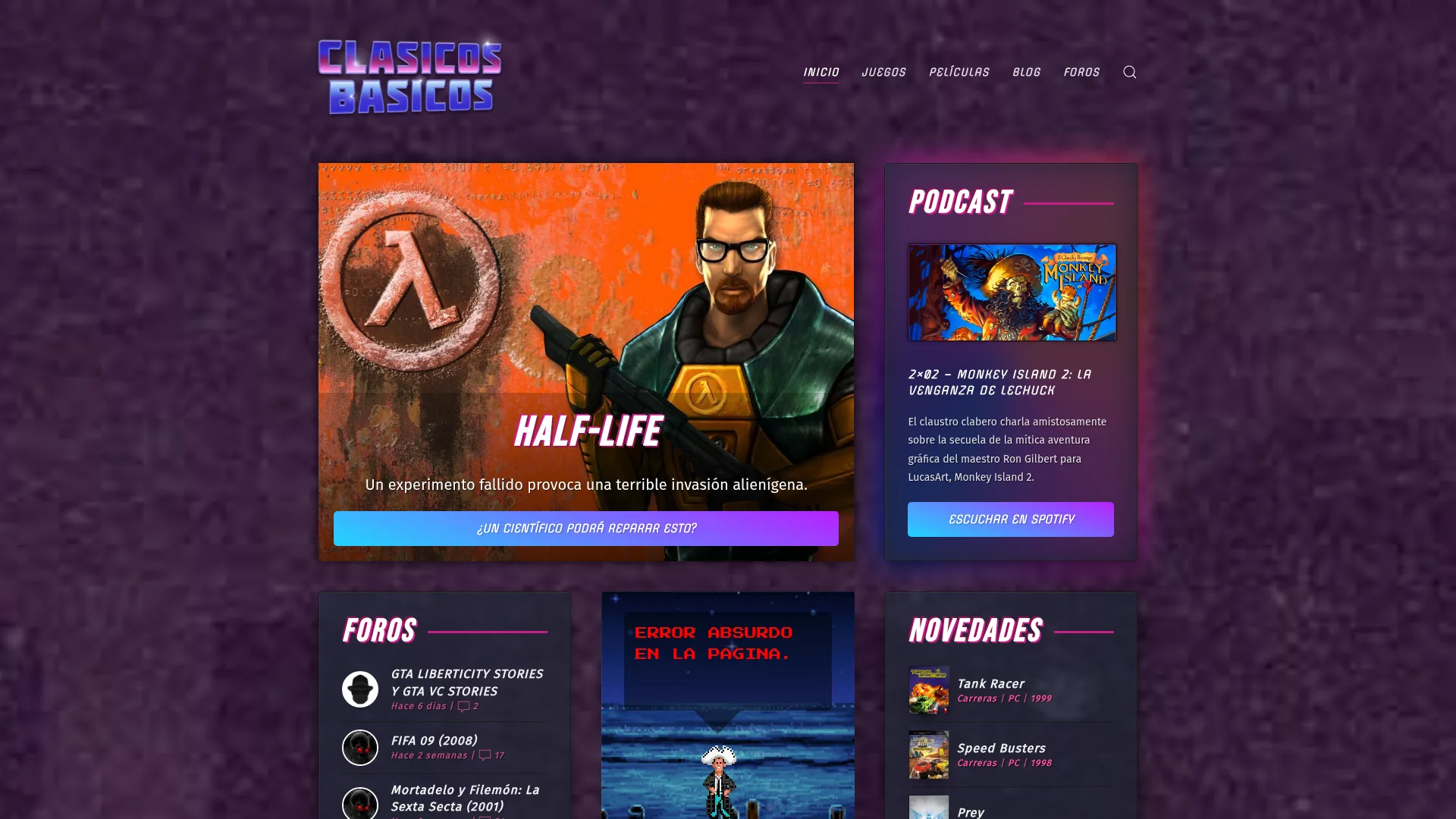
Clásicos Básicos
The living museum of classic gaming in Spanish
A living retro community built around the content: a shelf-by-shelf catalog of games and films, an integrated podcast and its own forum (Foro CLABA) where members come back every day.
“It's not just a website, it's the club we always wanted. The game shelves are amazing and the forum runs beautifully. The community feels it's theirs, and that's something you can't buy: you build it right.”
 Walkthrough Media
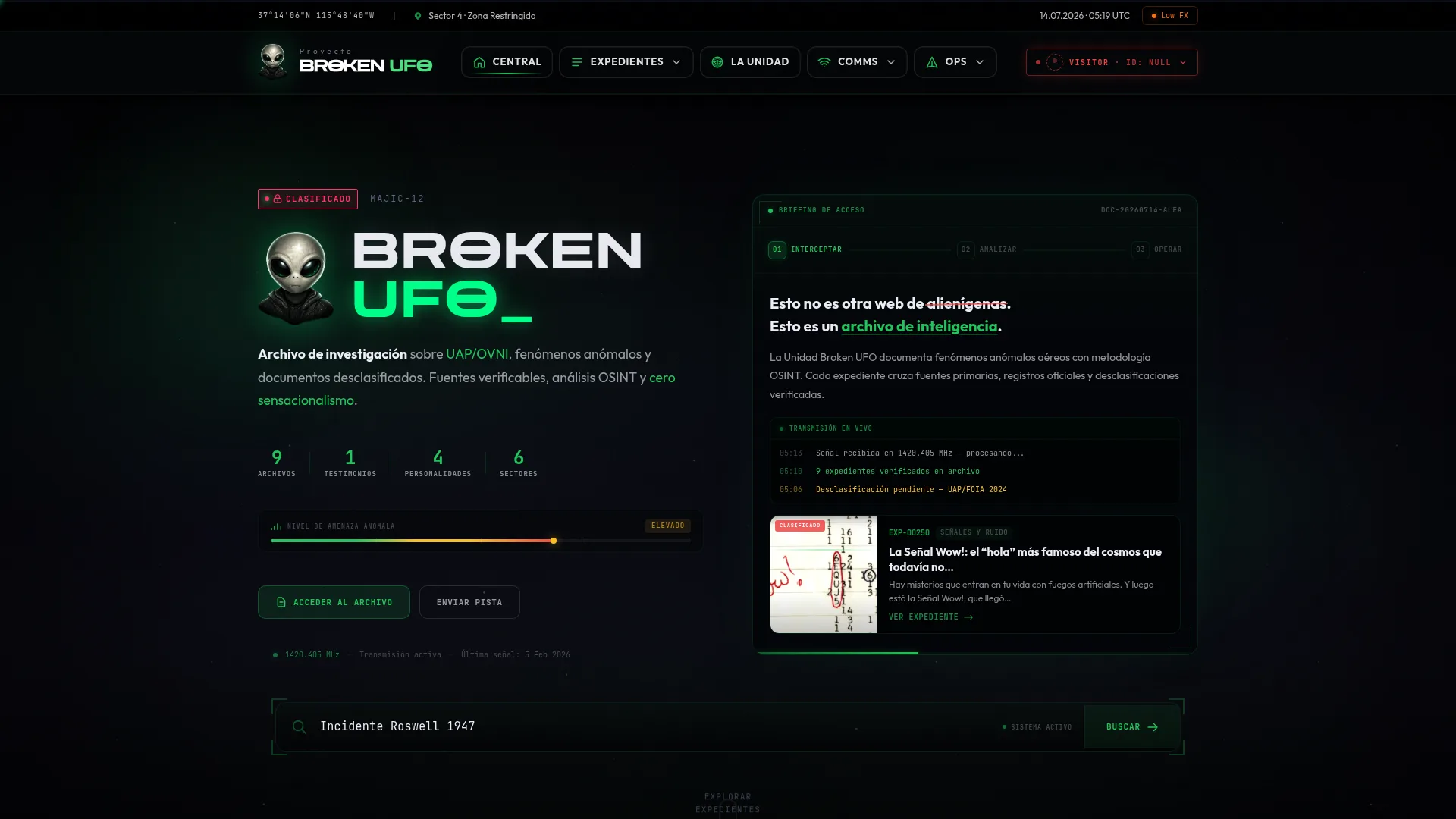
 Broken UFO
An intelligence archive on the unexplained. Less hype, more sources.
It went from idea to a go-to outlet: a visual identity no one else in the genre has, sub-second load times despite the cinematic animations, and a reader base that comes back every week through briefings, the newsletter and Telegram.
“We wanted something that didn't look like 'just another UFO website' and they delivered an intelligence unit. Every detail, from the scroll to the files, conveys exactly who we are. The result went well beyond the brief.”
 Walkthrough Media
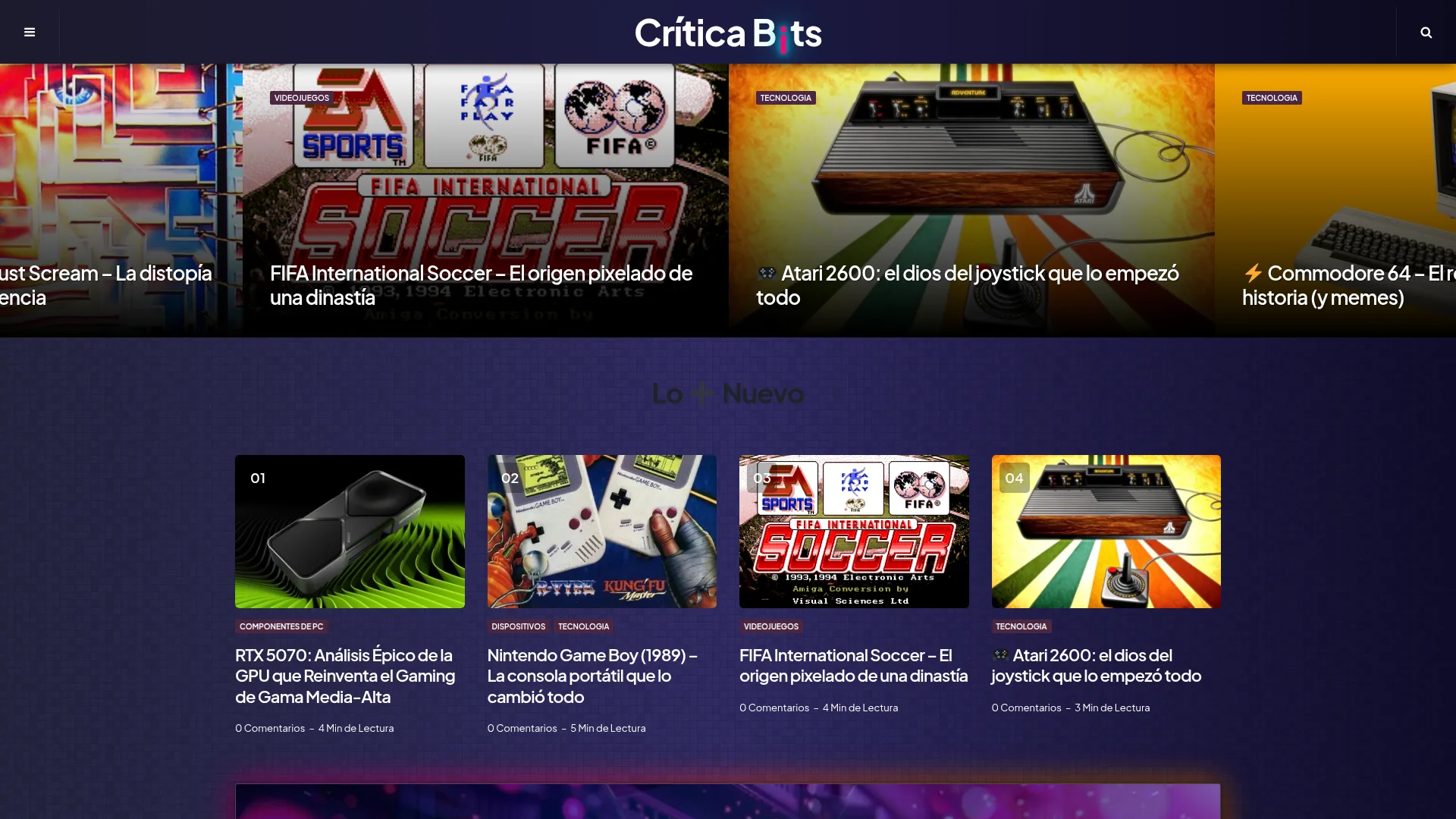
 Crítica Bits
We review down to the last byte
The magazine launched with an editorial identity you recognize on the first scroll: retro covers, bold typography and a category architecture that drives one read into the next.
“We write killer reviews and we needed a website to match. They nailed the tone: irreverent on the outside, flawless underneath. Publishing is a pleasure and readers stick around for three more articles.”
Frequently asked questions
What people usually ask before they start. Can't find yours? Ask us.
Ask a question 01 Can you manage servers I already have?
02 What suits me better: dedicated server or AWS?
03 What happens if something goes down at 3 a.m.?
Is this your starting point? Sketch it out in 30 seconds.
We'll go over your situation on a short call and give you an actionable plan with scope, timeline and budget.
Ballpark ranges based on 100+ real projects, before tax. Your actual quote is a fixed price in writing, after a 20-minute call. No fine print.




Reply in 1–2 business days · Detailed proposal · No strings attached