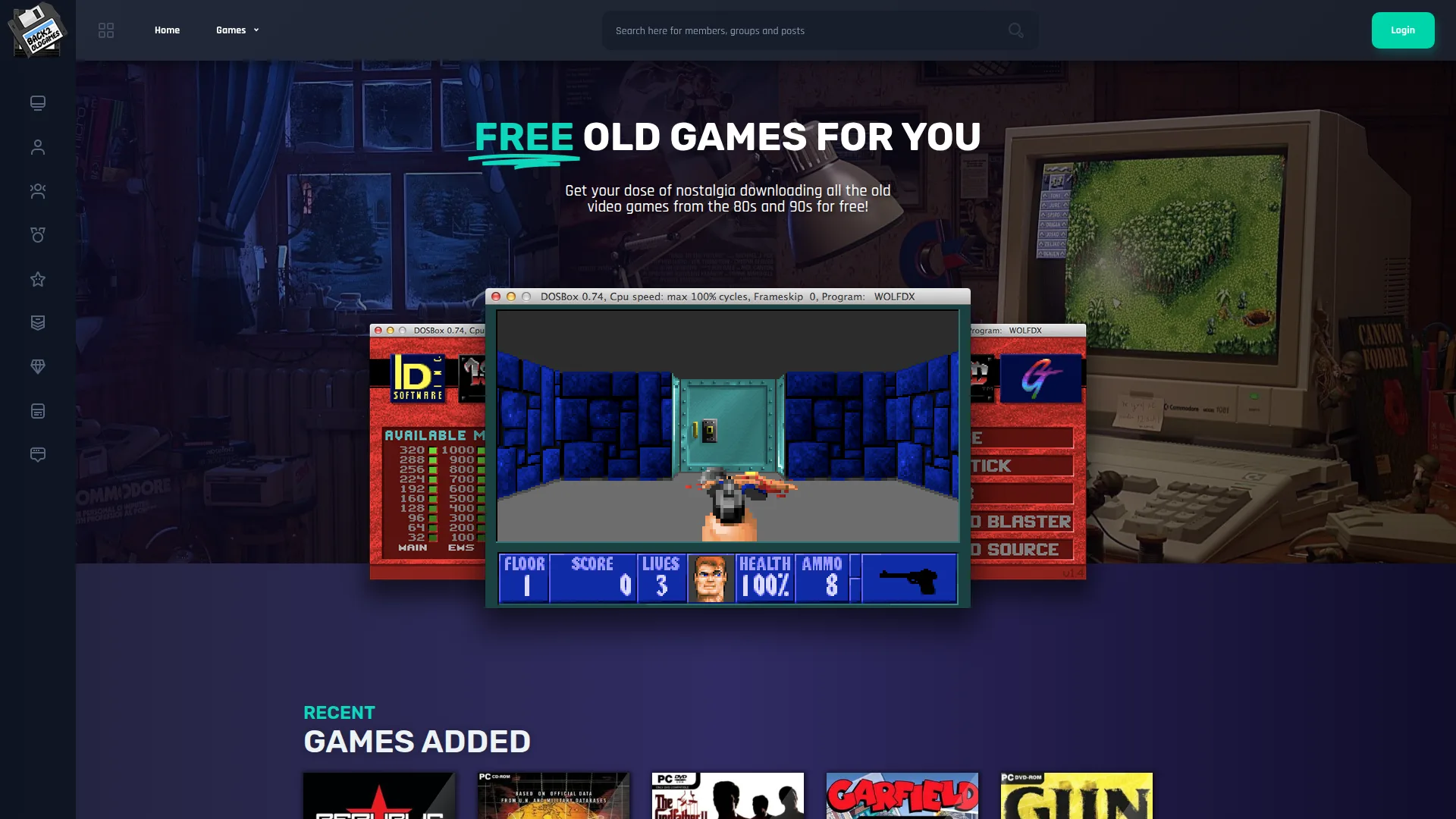
In 2022 we built Back2OldGames on WordPress and BuddyPress: a downloadable archive of 12 systems with a community on top. Today it is something else: 16,498 games that play in the browser, across 56 systems, without a single plugin. This is what changed, and why.
The project had stopped being a content site
WordPress is a great tool for publishing, and BuddyPress gets you a community in an afternoon. For what Back2OldGames was in 2022 (game pages, downloads, profiles and badges) it made sense.
What came next was a different thing: starting an emulator inside the page, different controls for every system, save states, high scores nobody can fake, and quests that change every day. That is not content anymore, it is an application. And building it from plugins would have meant one more plugin to maintain for every feature, all of them pulling on the same database.
So it was not migrated: it was rebuilt. A platform of its own, from the home page to the last form, with no WordPress, no BuddyPress, no WooCommerce and no Elementor.
The player only exists when you press Play
Games run in ClaBa Player, the site's own player, built on EmulatorJS (GPL-3.0). What matters is when it loads: only when you press Play. A game page is a light page you read, share and find in search like any other; the emulator, which is the heavy part, arrives when someone asks for it.
It works with a keyboard, with a USB or Bluetooth controller and, on touch screens, with on-screen controls. Save states stay in the player's browser. There is nothing to install and no account to create.
Accounts without passwords
Playing, rating and downloading never require an account. Anyone who wants one, to keep their list, favorites and history on every device, signs in with a passkey (or, if they prefer, with Google, X, Facebook or GitHub). No password to remember, none to leak, and no “forgot my password” flow to maintain.
A leaderboard is only worth it with clean rules
Score Attack puts your name on the board for a classic. The player reads the score from the game itself as you play and, during the run, switches off what an emulator allows and an arcade cabinet does not: save and load, fast-forward, slow motion, rewind and cheats. Submitting a score needs an account. A leaderboard where you can rewind measures nothing.
Gamification without punishment
The 2022 version had badges, missions, ranks and credits. The new one keeps the idea and changes the substance: the retro passport is opt-in, gives XP and permanent stamps for exploring different games, not for finishing them or setting records, and never takes points away or locks anything if you skip a day. Quests reset every day.
The share card for your passport shows your player name, XP, level and stamps. Never your private play history, your email or your save states.
Every game page shows the details that exist for that game (year, genre, developer, players, description). When a detail is unknown, it is left out instead of guessed. With 16,680 games it would be easy to fill the gaps; that is exactly what you must not do.
No ad networks
The site is free and runs on hosting donated by Super Awesome Host (also a client of ours), credited by the site itself, with no third-party ad code, no pop-ups and no AdSense. Analytics cookies are only set if you accept them; until then, measurements store nothing on your device. Cloudflare sits in front, and the forms are protected by Turnstile.
And in your pocket
The new platform has an Android app, in beta, downloaded straight from the site: no account, no subscription and no ad networks. The same catalog and the same games, with touch controls and landscape play.
Then and now
- Systems: from 12 to 56, across consoles, handhelds, arcade boards and computers.
- Playing: from downloading and figuring it out yourself to pressing Play in the browser (16,498 of 16,680 games).
- Accounts: from a WordPress username and password to passkeys (or Google, X, Facebook or GitHub), and optional.
- Community: from BuddyPress groups and forums to leaderboards with clean rules, daily quests and mini-games like Daily Pixel.
- Plugins: from a stack of them to none.
We didn't migrate a website: we built the one the project already was. WordPress was the starting point, not the ceiling.
Team note